Growing up Spartanἡ Λακωνικὴ ἀγωγή
Barefoot, hungry and encouraged to steal: the most famous education in history
Everywhere else in Greece a father decided how to bring up his son. In Sparta the state took the boys at seven, put them into packs, and raised them together: barefoot, in one cloak a year, never quite fed, and expected to steal the rest and be beaten if caught. Admirers from Xenophon onwards held it up as a school of courage and obedience. But the fullest accounts were written long after classical Sparta was gone, and historians still argue over how much of the famous picture is true.
Not like other Greeks
Xenophon, an Athenian who admired Sparta and, Plutarch says, had his own sons brought up there, begins with the contrast. In other Greek cities, fathers who want the best for their sons hire a slave to watch them, send them to teachers of letters, music and wrestling, give them sandals and changes of clothes, and let them eat as much as they want. Lycurgus, Sparta's legendary lawgiver, did the opposite.
ὁ δὲ Λυκοῦργος, ἀντὶ μὲν τοῦ ἰδίᾳ ἕκαστον παιδαγωγοὺς δούλους ἐφιστάναι, ἄνδρα ἐπέστησε κρατεῖν αὐτῶν ἐξ ὧνπερ αἱ μέγισται ἀρχαὶ καθίστανται, ὃς δὴ καὶ παιδονόμος καλεῖται,“Lycurgus, on the contrary, instead of leaving each father to appoint a slave to act as tutor, gave the duty of controlling the boys to a member of the class from which the highest offices are filled, in fact to the Warden as he is called.”
The boys went barefoot, to harden their feet for climbing and running; they wore one cloak all year, to face heat and cold; and they were given too little food, so that they would learn to go hungry.
Steal, but don't get caught
ὡς δὲ μὴ ὑπὸ λιμοῦ ἄγαν αὖ πιέζοιντο, ἀπραγμόνως μὲν αὐτοῖς οὐκ ἔδωκε λαμβάνειν ὧν ἂν προσδέωνται, κλέπτειν δʼ ἐφῆκεν ἔστιν ἃ τῷ λιμῷ ἐπικουροῦντας.“On the other hand, lest they should feel too much the pinch of hunger, while not giving them the opportunity of taking what they wanted without trouble he allowed them to alleviate their hunger by stealing something.”
Xenophon's explanation is simple: stealing food takes sleepless nights, ambushes and scouts, so it trains a soldier. The punishment was not for stealing but for stealing badly.
Taken at seven
Plutarch, writing about AD 100, adds much more. At birth, he says, a Spartan baby was not the father's to keep: elders of the tribe examined it, and a sickly or deformed child was taken to a place called the Apothetae, "the Deposits", at the foot of Mount Taygetus.
Ancient tradition / legend Plutarch is the only ancient writer to describe this inspection, many centuries after the time of which he writes. Infants were abandoned in many Greek cities; whether Sparta had a formal public test is doubted.
At seven, the boys were enrolled in "herds", agelai, under the bravest and most sensible boy as leader, while older men watched them fight and set them against each other to see who would not run.
γράμματα μὲν οὖν ἕνεκα τῆς χρείας ἐμάνθανον ἡ δ’ ἄλλη πᾶσα παιδεία πρὸς τὸ ἄρχεσθαι καλῶς ἐγίνετο καὶ καρτερεῖν πονοῦντα καὶ νικᾶν μαχόμενον.“Of reading and writing, they learned only enough to serve their turn; all the rest of their training was calculated to make them obey commands well, endure hardships, and conquer in battle.”
At twelve they gave up tunics altogether and lived dirty, with one cloak a year and almost no baths.
The altar of Orthia
Xenophon describes a ritual at the sanctuary of Artemis Orthia: boys tried to snatch as many cheeses as possible from the altar while others whipped them. By Plutarch's day it had become a test of endurance and a public show.
καὶ τοῦτο μὲν οὐδὲ ἀπὸ τῶν νῦν ἐφήβων ἄπιστόν ἐστιν, ὧν πολλοὺς ἐπὶ τοῦ βωμοῦ τῆς Ὀρθίας ἑωράκαμεν ἐναποθνήσκοντας ταῖς πληγαῖς.“And even this story gains credence from what their youths now endure, many of whom I have seen expiring under the lash at the altar of Artemis Orthia.”
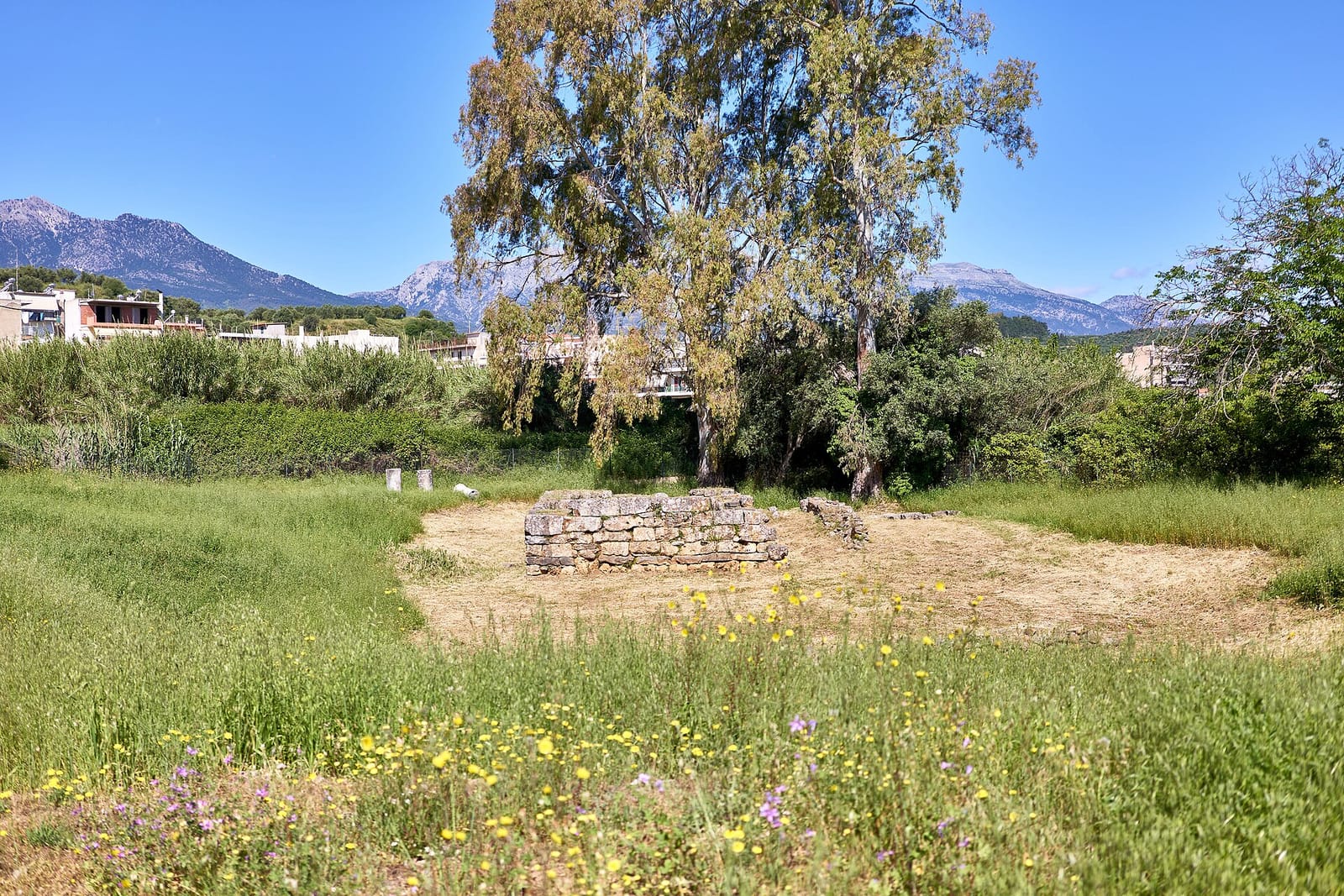
Well established The British School at Athens excavated the sanctuary between 1906 and 1910. Its most visible building is a theatre of the third century AD, built around the old altar so that crowds could watch the whipping.
How much is true?
Debated among scholars Almost everything we know about the Spartan upbringing comes from outsiders: Xenophon in the fourth century BC, and Plutarch and others under the Roman Empire, when Sparta was a small provincial city proud of its past. The training had lapsed by the third century BC, when King Cleomenes III restored the *agoge*, with a Stoic philosopher's help. Some historians, among them Nigel Kennell, argue that the system Plutarch saw had been reformed and revived more than once since then, and that later details have been read back into classical times. Others think the core of the picture is old. What is certain is that the classical Spartans themselves wrote almost nothing about it.
- Before c. 600 BC?Lycurgus gives Sparta its laws, according to Spartan tradition. Ancient tradition / legend
- c. 380s BCXenophon writes the Constitution of the Spartans. Debated among scholars
- 3rd c. BCKing Cleomenes III restores the old Spartan training after it had lapsed.
- c. AD 100Plutarch writes the Life of Lycurgus, and sees boys whipped at the altar of Orthia.
- 3rd c. ADA theatre is built around the altar of Orthia for spectators.
- 1906–1910The British School at Athens excavates the sanctuary.
Read it yourself
Sources
Ancient sources, in the library
Modern scholarship
- Nigel M. Kennell, The Gymnasium of Virtue: Education and Culture in Ancient Sparta (Chapel Hill: University of North Carolina Press, 1995). Argues that much of the system Plutarch describes is a later revival.
- Jean Ducat, translated by Emma Stafford, P.-J. Shaw and Anton Powell, Spartan Education: Youth and Society in the Classical Period (Swansea: Classical Press of Wales, 2006). Collects and weighs every source.
- R. M. Dawkins (ed.), The Sanctuary of Artemis Orthia at Sparta, Excavated and Described by Members of the British School at Athens, 1906–1910 (London: Society for the Promotion of Hellenic Studies (Macmillan), 1929). The excavation of the sanctuary of Orthia.
Every Greek quotation here is checked word for word against the edition it cites, and every translation against the translation named. Written 27 September 2026.