The Painted Stoa
The Painted StoaΣτοὰ Ποικίλη
A colonnade on the Athenian Agora hung with great paintings of battles and myths. Zeno taught there, and his followers were named Stoics after it. Stories, pictures and argument in one place.
People and power
Kings, tyrants, generals and the women the sources could not ignore.
Democracy
How Athens ruled itself: the Assembly, the lot, the courts, ostracism, and its failures.
Education
Learning to read, to fight, to argue: from the schoolroom to the Academy.
Daily life
Food, wine, clothes, houses, money, medicine, sport and the theatre.
Religion and belief
The gods as the Greeks worshipped them: sacrifice, oracles, mysteries, magic and the dead.
The beautiful
Poetry, painted statues, vases and the passages worth learning Greek for.
The weird and the strange
Marvels, taboos, odd lives and odder deaths, unsolved mysteries and lost wonders, and what is likely true.
The dark side
Slavery, war, plague and cruelty, told factually, without sensation and without apology.
Archaeology
How we know: excavation, dating, pottery, great sites and finds, and the problems.
On the wall today · The weird and the strange
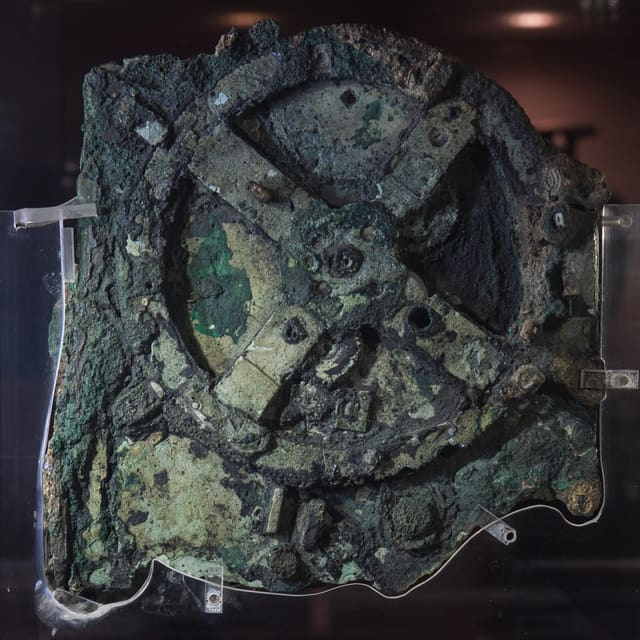
The Antikythera mechanism
In 1901, divers working a shipwreck off the small island of Antikythera brought up bronze and marble statues, glass and pottery, and a shapeless lump of corroded bronze and wood. A year later someone noticed a gearwheel inside it. More than a century of study, lately with X-ray scanning, has shown that it was a hand-cranked machine that modelled the movements of the sun and moon, predicted eclipses and counted the years to the next Olympic Games. Nothing remotely like it survives from the ancient world.

Why Stoics are called Stoics
The Stoa Poikile, the “Painted Colonnade”, stood on the north side of the Athenian Agora, hung with famous paintings such as the Battle of Marathon. Around 300 BC Zeno of Citium began to teach there, walking up and down the colonnade.
His followers were first called Zenonians, then Stoics, “the people of the Stoa”.
Map: the Ancient World Mapping Center (ODbL) and Pleiades (CC BY); counts from GLAUx (CC BY-SA). Archaeology: The Street of the Tombs in the Kerameikos, where the Sacred Way to Eleusis began, Photograph by Jebulon, CC0, via Wikimedia Commons.
