The Painted StoaThe Kerameikos
The KerameikosΚεραμεικός
Athens' potters' quarter and its main cemetery, one of the city's most important excavations. Pots and graves are much of what archaeology has to work with.
Layer 1 · topsoil, cut by a pit
The trouble with digging
Excavation destroys what it records. Early diggers hunted treasure and heroes, looters still dig for the market, and who should keep what was found is argued to this day.
Layer 2 · sherds in a clay layer
How we know
Layers, broken pots, traces of paint, and the methods that turn them into dates and stories.
- Reading the layersHow archaeologists turn soil, graves and broken pots into dates, from Thucydides to tree rings
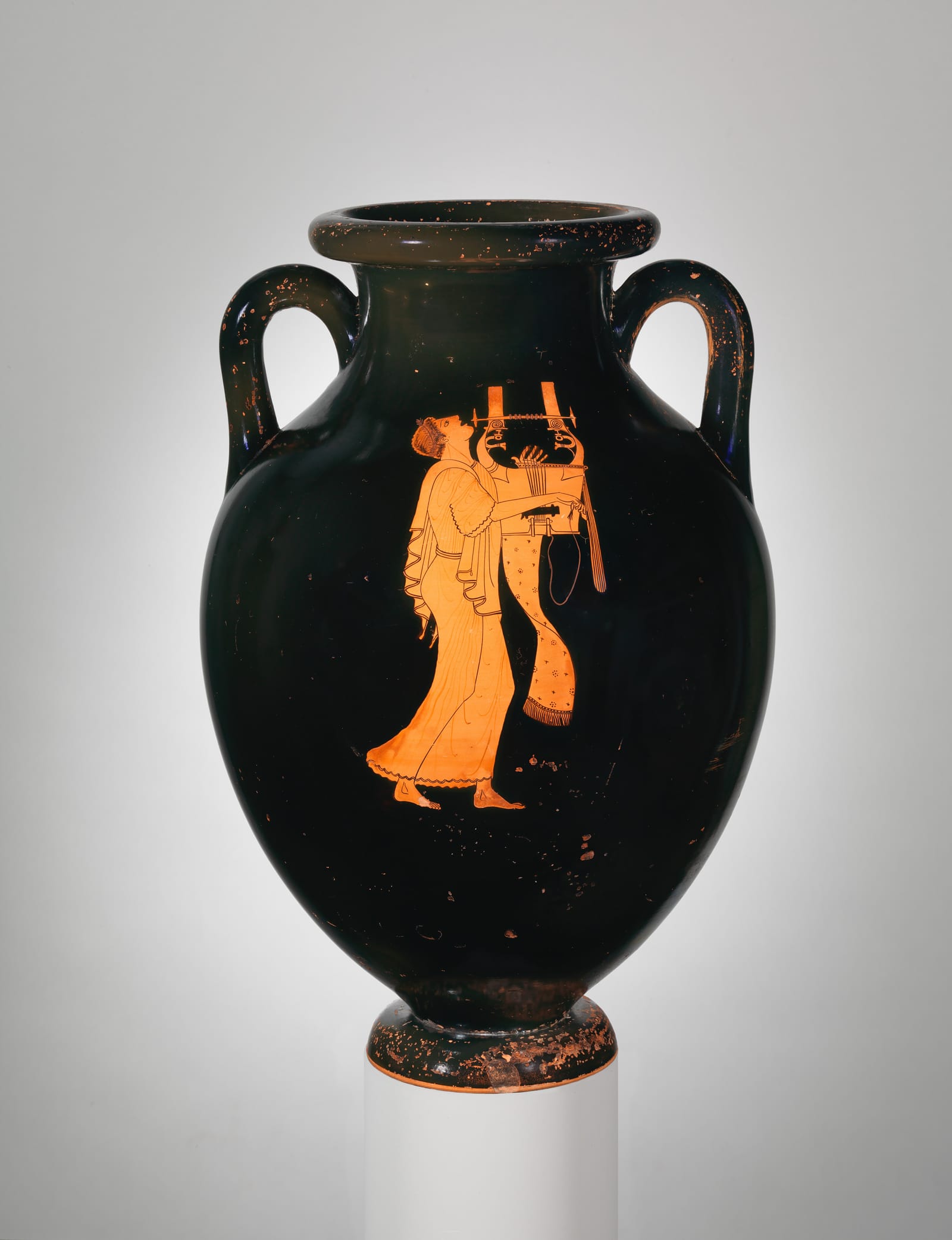
- Black-figure and red-figureHow Athenian potters made pictures that have lasted 2,500 years
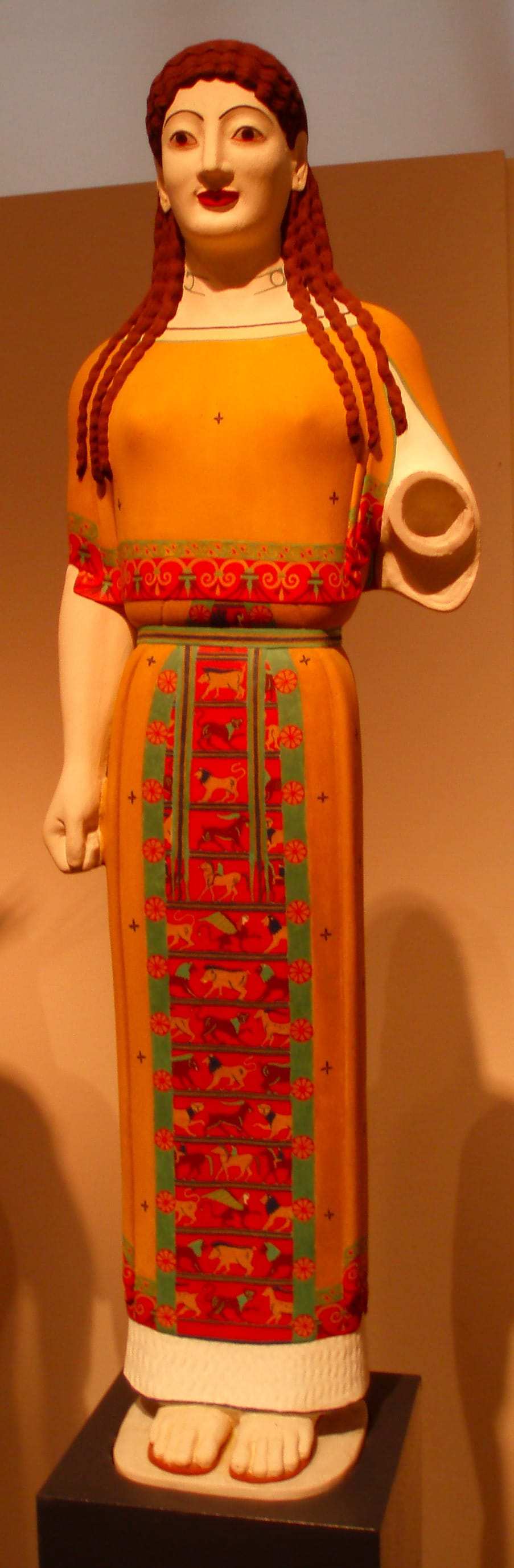
- Greek statues were paintedThe white marble we admire is what time left behindalso in The beautiful
Layer 3 · wall foundations
Great sites
The places where digging has changed what we know: cemeteries, sanctuaries, mines and cities.
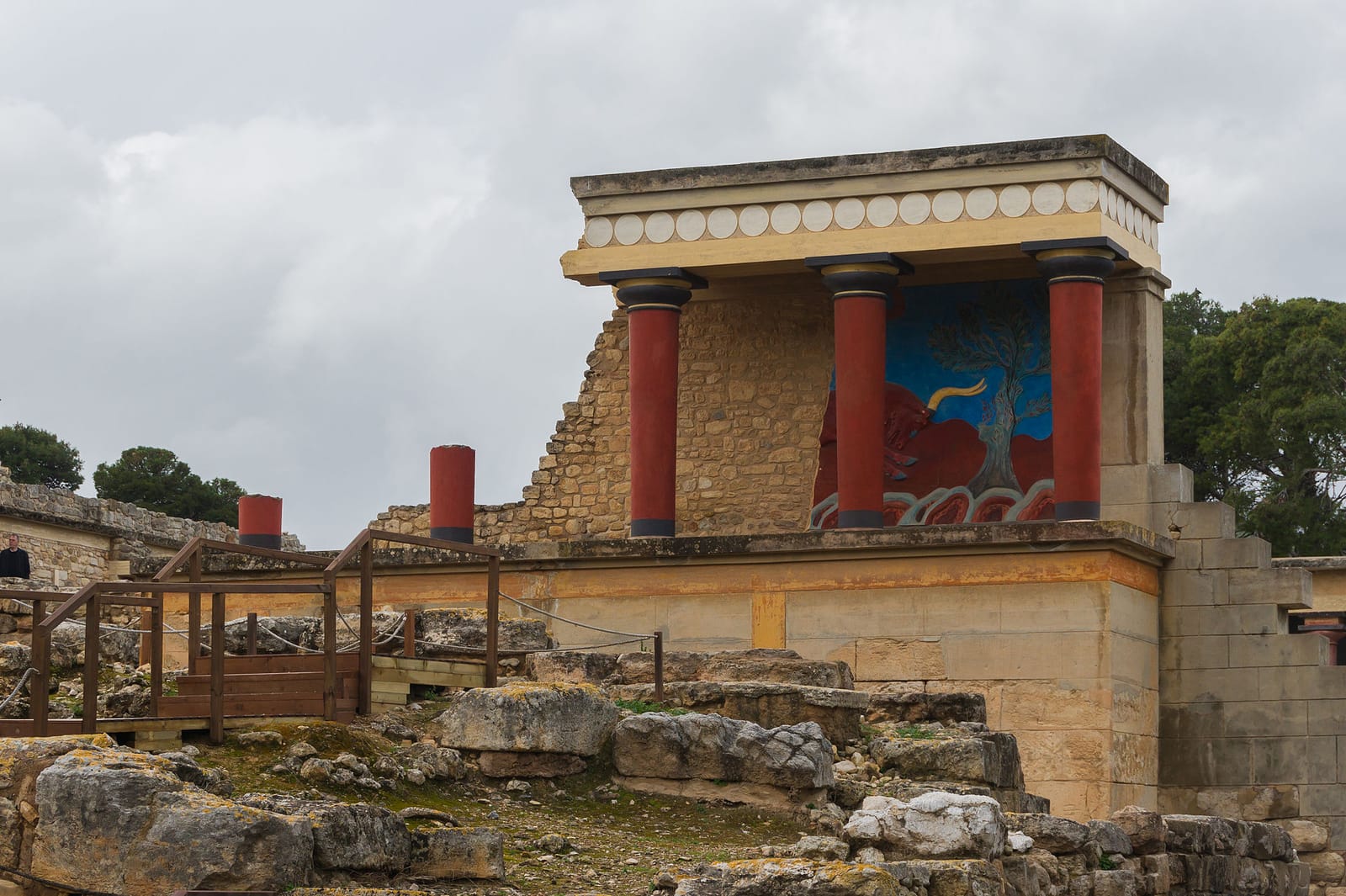
- Knossos and the labyrinthMinos' city in legend, and the palace Arthur Evans dug up and rebuilt in concrete
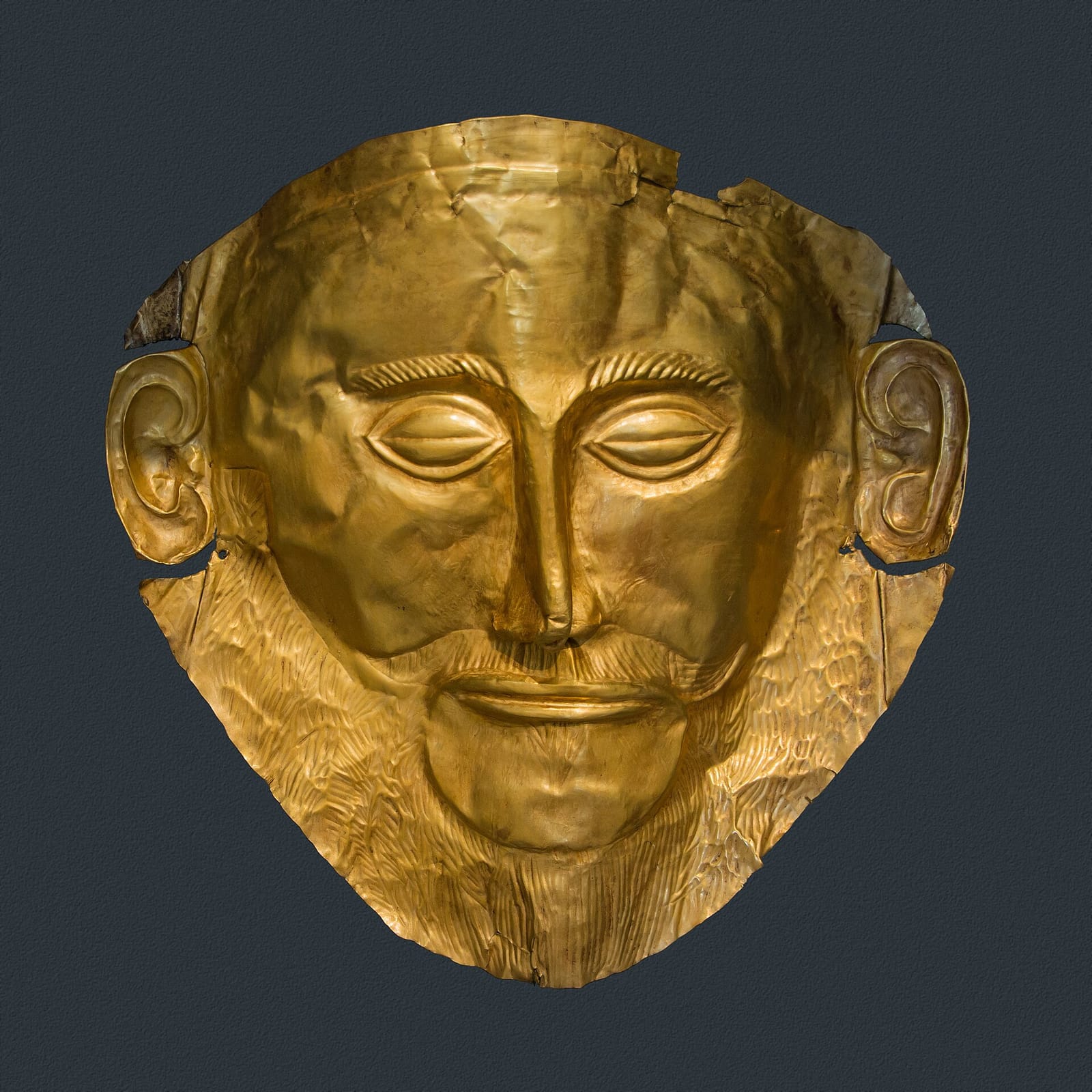
- Mycenae, rich in goldHomer's city of Agamemnon, and the graves Schliemann opened in 1876
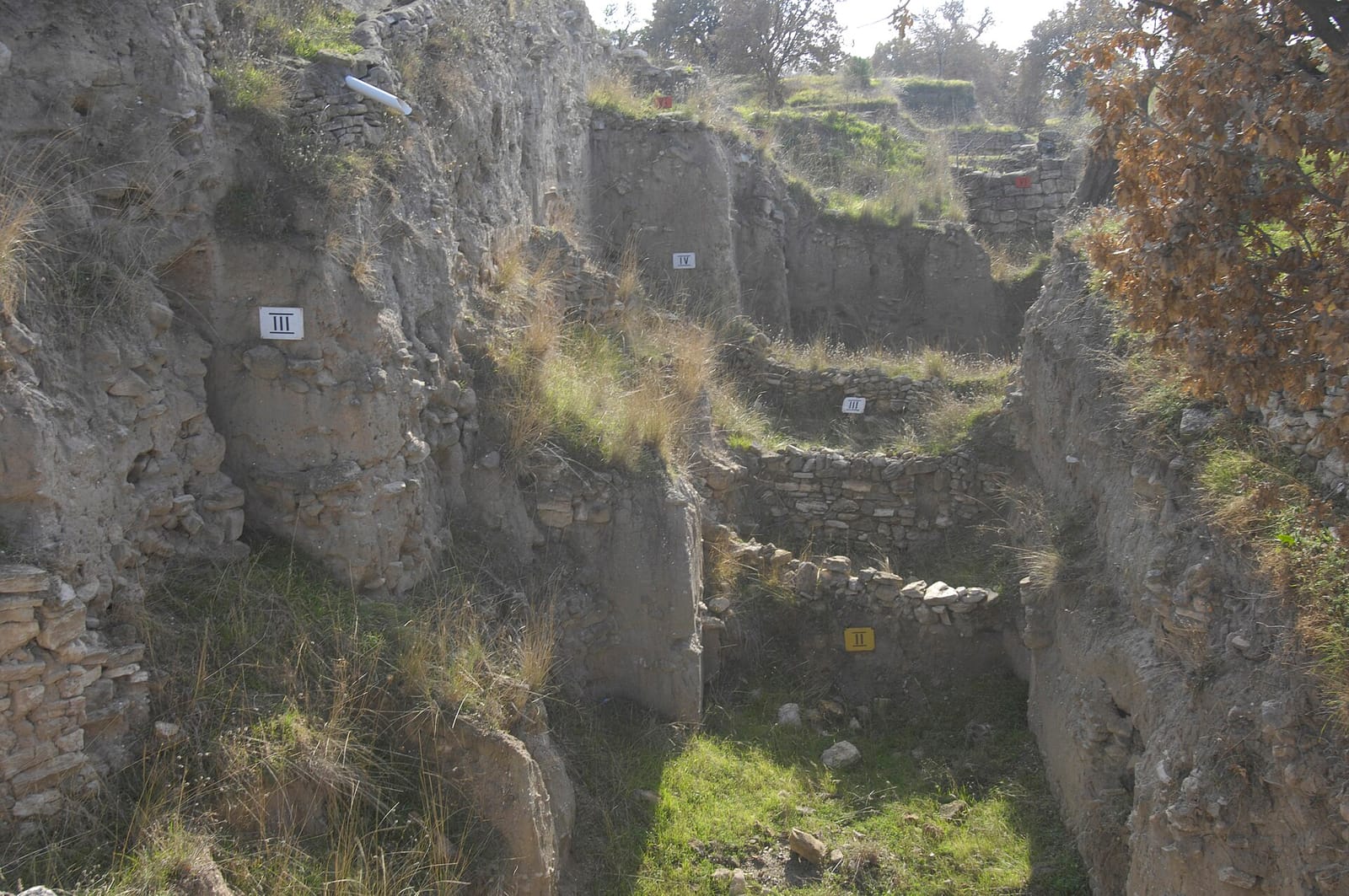
- Troy at HisarlikHomer's sacred Ilios, the Greek town that claimed to be it, and the mound of many cities
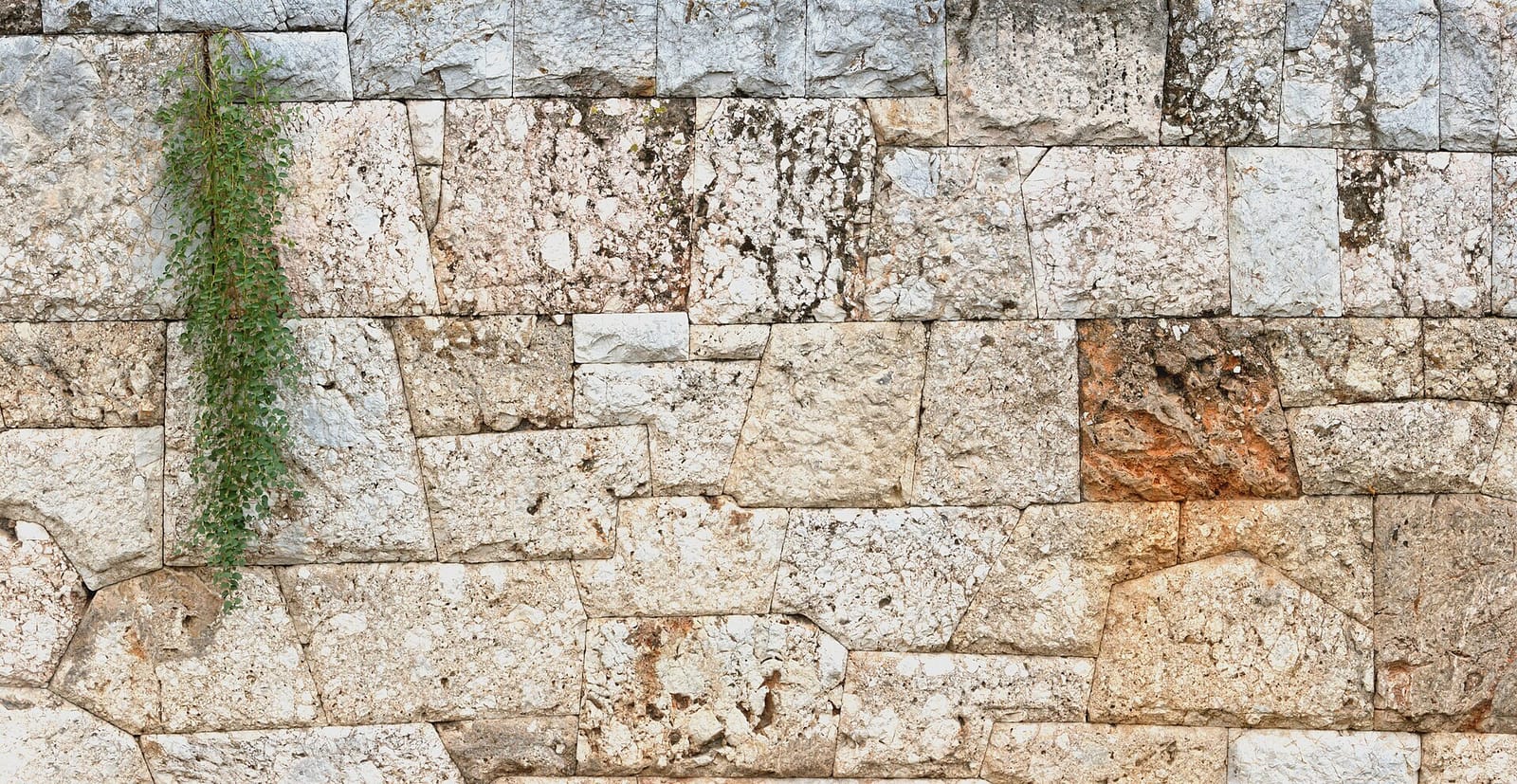
- The KerameikosThe potters' quarter and cemetery of Athens, dug for over 150 years
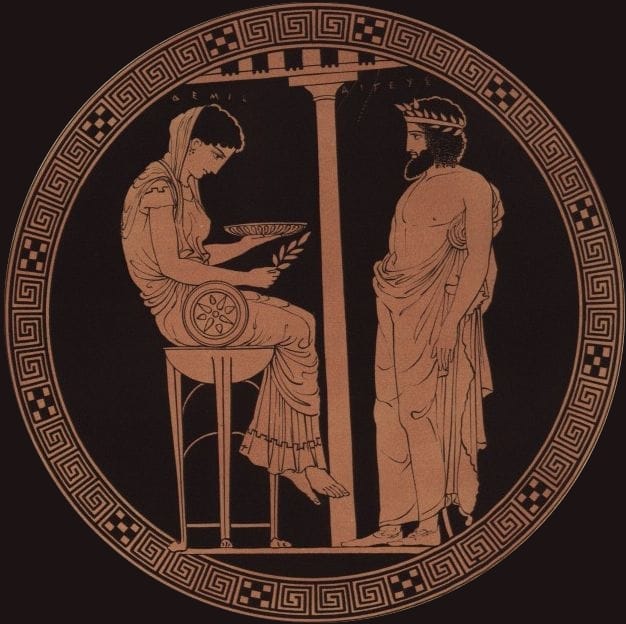
- Delphi and the oracleWhere kings asked Apollo, and the answers could ruin themalso in Religion and belief
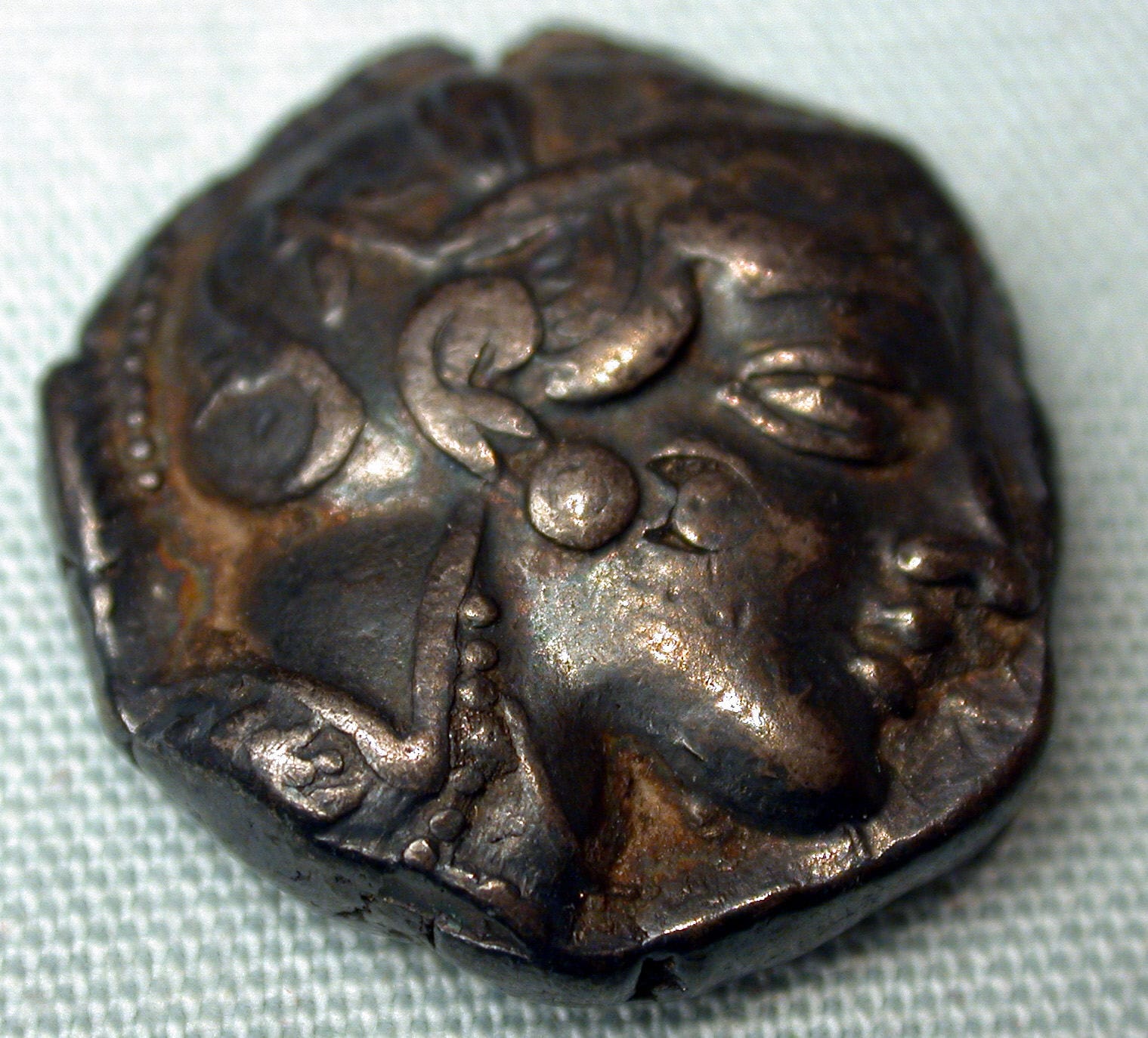
- The silver of LaurionThe mines that paid for Athens' fleet, and the slaves who worked themalso in The dark side
Layer 4 · a grave and its offerings
Great finds
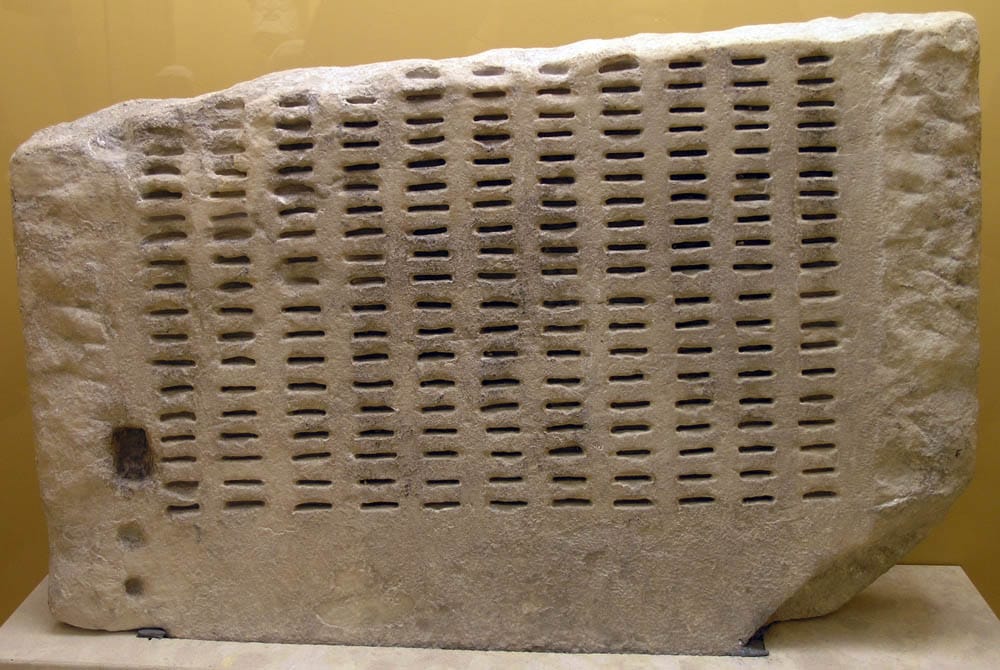
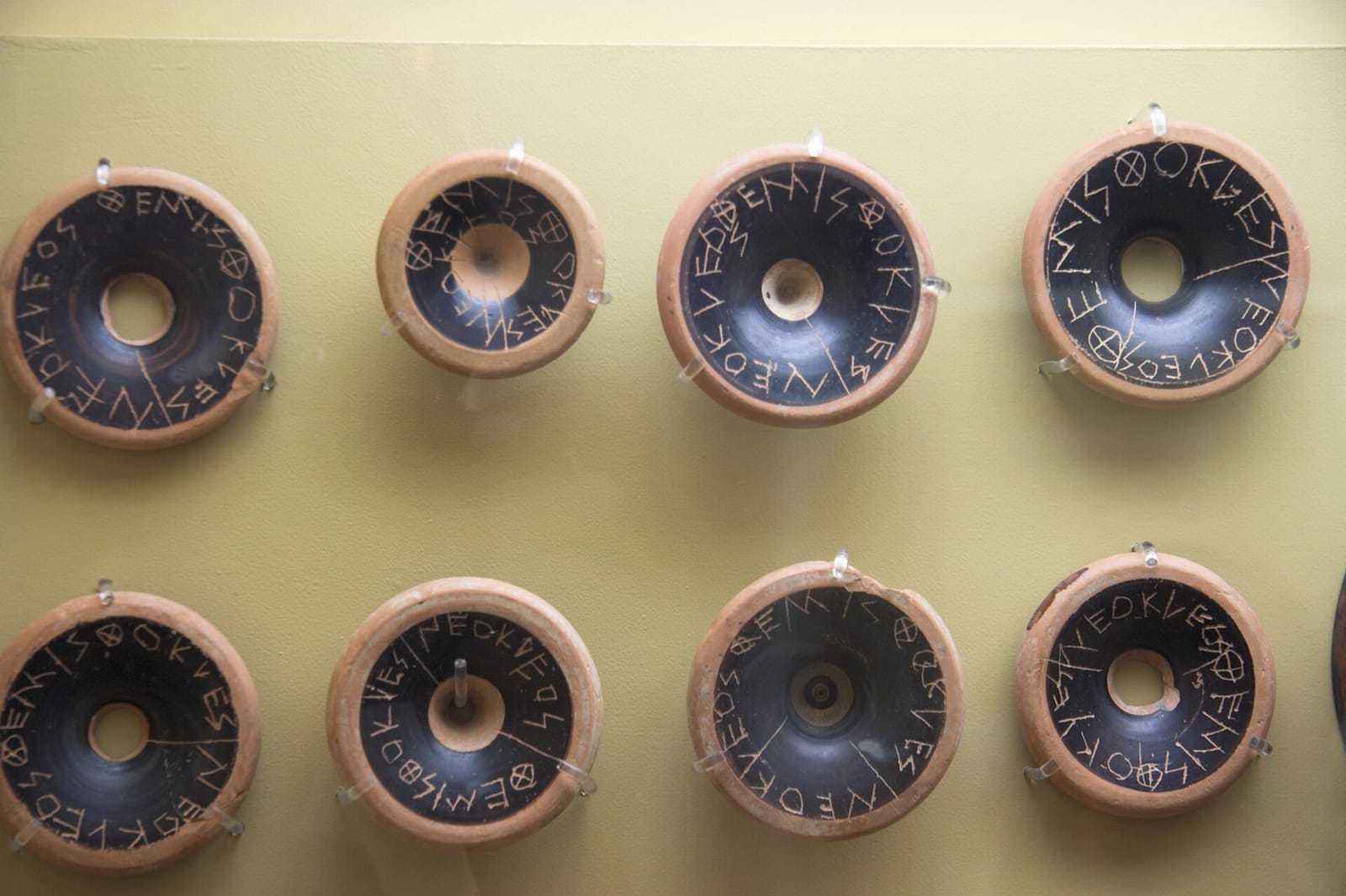
Single objects that rewrote a chapter: a bronze computer from a shipwreck, clay tablets baked in a palace fire, a machine for choosing jurors, votes scratched on broken pots.
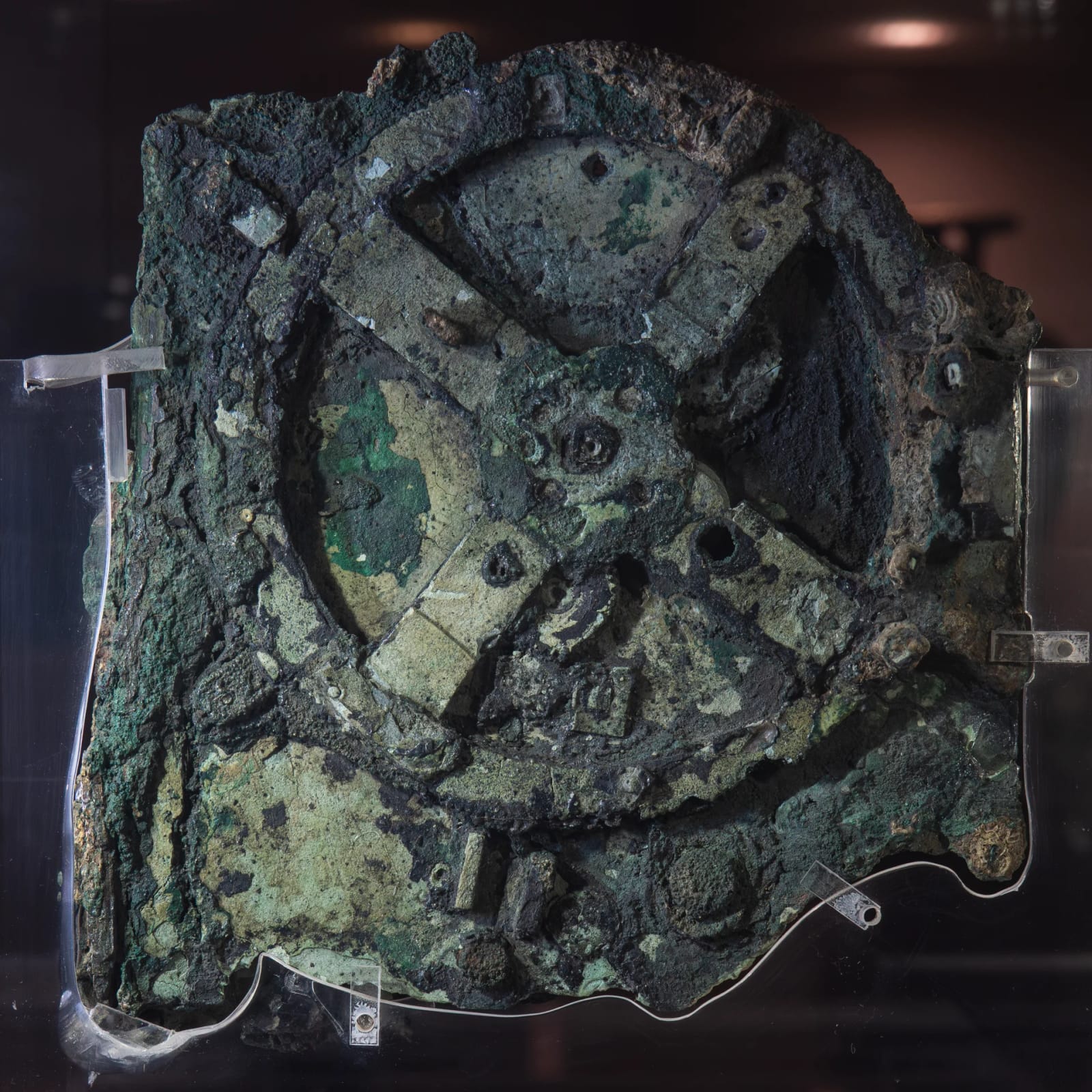
- The Antikythera mechanismA bronze calculator of the heavens, from a shipwreck of about 60 BCalso in The weird and the strange
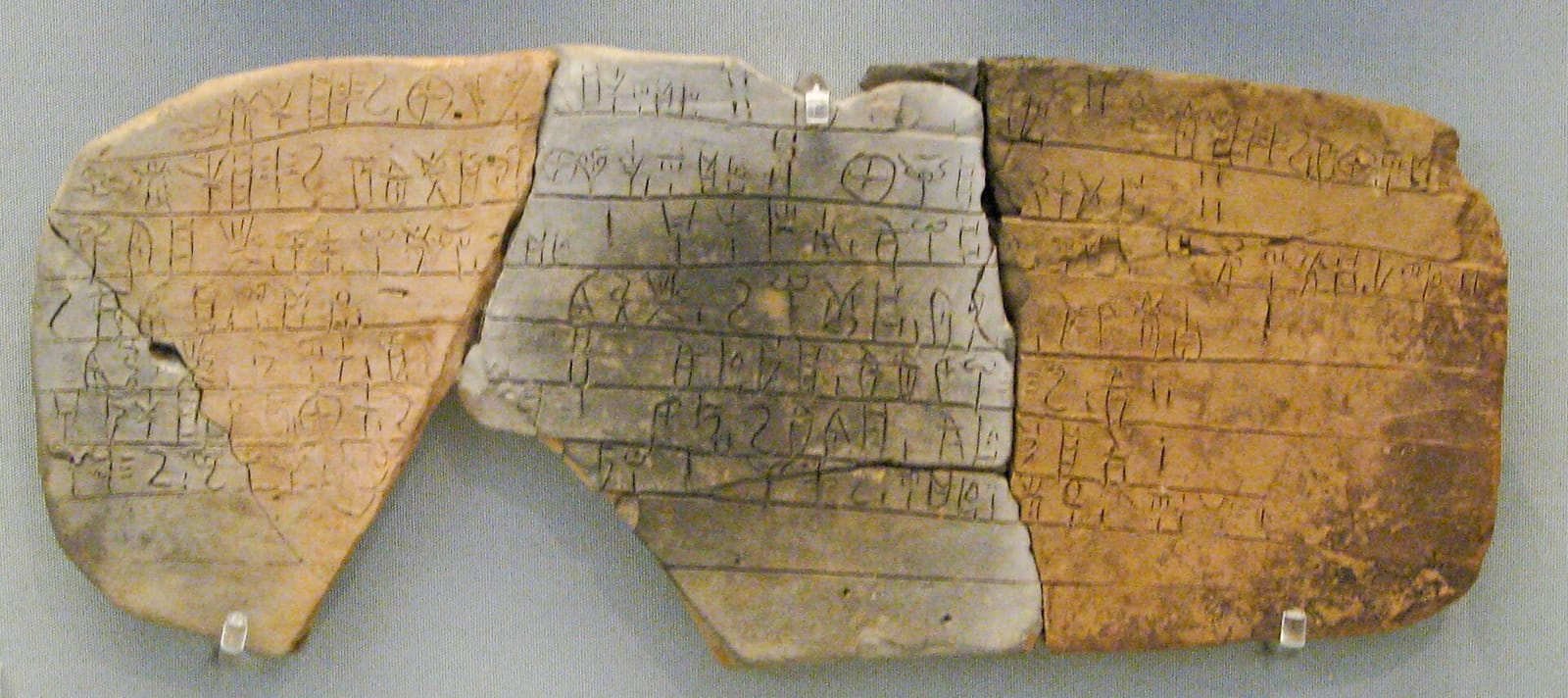
- Linear BThe oldest written Greek, read at last in 1952also in Language
- Chosen by lot: the allotment machineHow Athens trusted chance, and built a machine to make sure nobody cheated italso in Democracy
- OstracismVoting a man out of Athens for ten years, on a broken potalso in Democracy
The natural subsoil
Where the digging happens
Excavated sites of the Greek world, and how often the library's texts name them. Each opens on the Periplus, the site's map.
- Κνωσσός Knossosnamed 52 times
- Μυκήνη Mycenaenamed 111 times
- Τίρυνς Tirynsnamed 52 times
- Πύλος Pylosnamed 291 times
- Τροία Troynamed 1,443 times
- Θήρα Theranamed 40 times
- Ἀθῆναι Athensnamed 2,253 times
- Δελφοί Delphinamed 1,059 times
- Ὀλυμπία Olympianamed 521 times
- Ἐπίδαυρος Epidaurosnamed 110 times
- Δῆλος Delosnamed 273 times
- Κόρινθος Corinthnamed 655 times
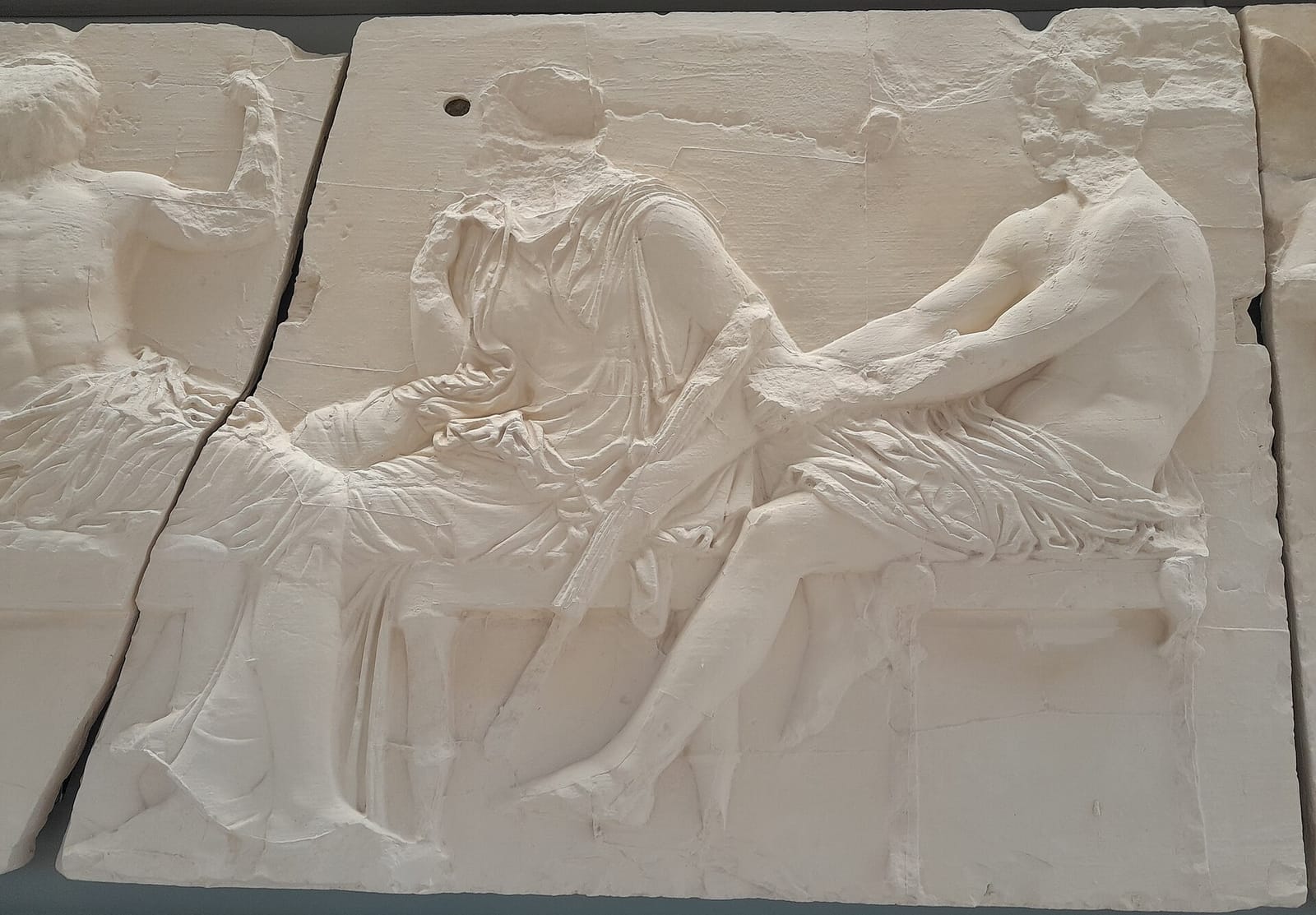
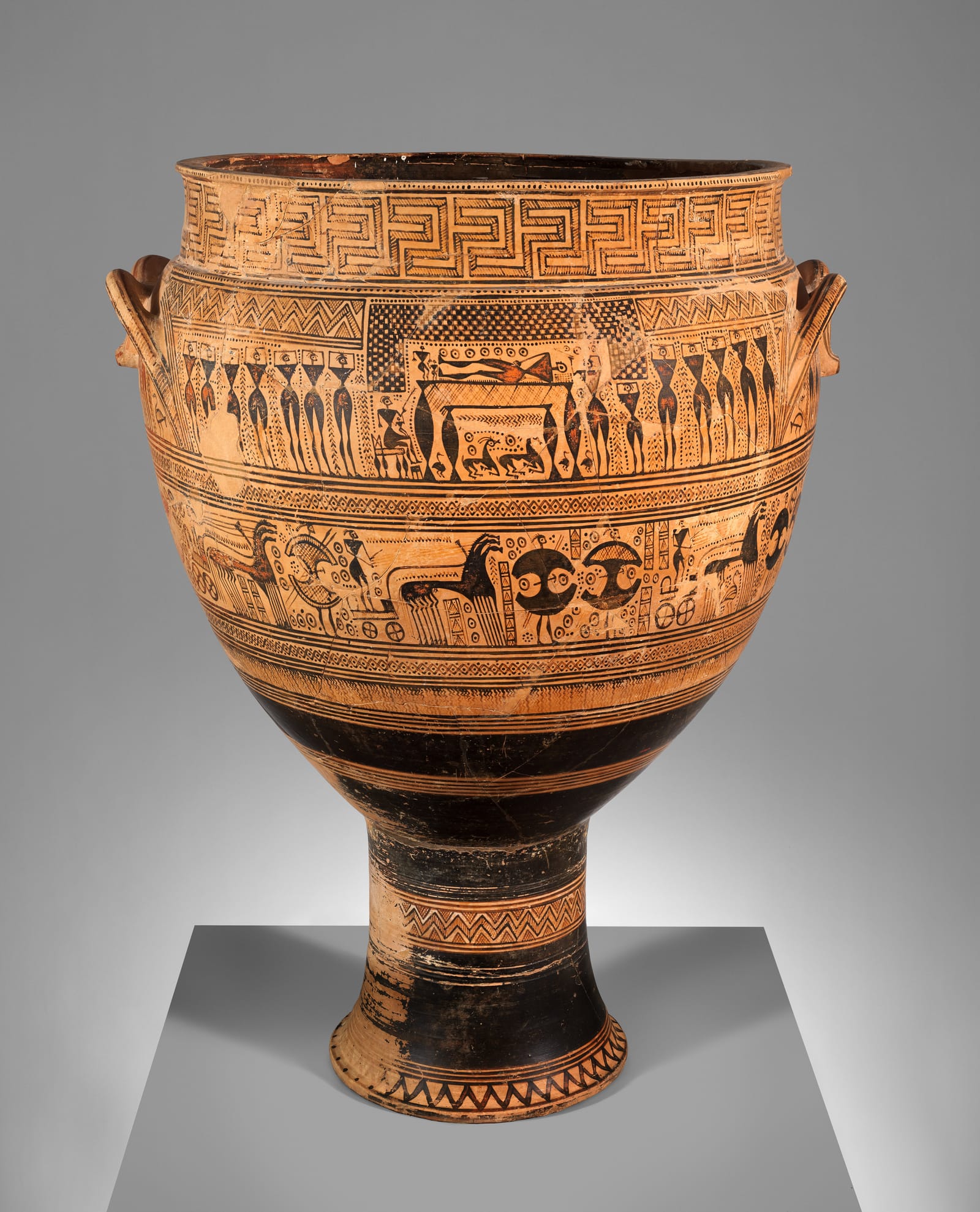
Photographs of the finds. I. Plaster cast in the Acropolis Museum of part of block IV of the Parthenon's east frieze; the marble original is in the British Museum, Original 5th century BC; modern cast. Acropolis Museum, Athens. Photograph by Deiadameian. CC BY-SA 4.0, via Wikimedia Commons. II. Attic Geometric krater attributed to the Hirschfeld Workshop, painted with a funeral, c. 750–735 BC. The Metropolitan Museum of Art, New York (14.130.14). Hirschfeld Workshop. CC0, via The Metropolitan Museum of Art. III. Red-figure amphora attributed to the Berlin Painter, c. 490 BC. The Metropolitan Museum of Art, New York (56.171.38). Berlin Painter. CC0, via The Metropolitan Museum of Art. IV. Painted reconstruction of the Peplos Kore (original c. 530 BC) by Vinzenz Brinkmann and Ulrike Koch-Brinkmann. Exhibition "Gods in Color". Photograph by Marsyas. CC BY-SA 2.5, via Wikimedia Commons. V. The North Entrance of the palace at Knossos, as reconstructed for Arthur Evans, with a copy of the charging-bull relief, Bronze Age palace, reconstructed in the 20th century. Knossos, Crete. Photograph by Jebulon. CC0, via Wikimedia Commons. VI. Gold funeral mask from Shaft Grave V at Mycenae, the so-called Mask of Agamemnon, 16th century BC. National Archaeological Museum, Athens (NAMA 624). Photograph by Jebulon. CC0, via Wikimedia Commons. VII. Schliemann's trench at Troy (Hisarlik), cut through the mound in the 1870s, Excavated 1870s. Hisarlik, Çanakkale province, Turkey. Photograph by Dosseman. CC BY-SA 4.0, via Wikimedia Commons. VIII. The Street of the Tombs in the Kerameikos, where the Sacred Way to Eleusis began. Kerameikos, Athens. Photograph by Jebulon. CC0, via Wikimedia Commons. IX. King Aegeus consults the Delphic oracle; the goddess Themis sits on the tripod. After a red-figure cup by the Kodros Painter, c. 440–430 BC, drawing published 1846. Antikensammlung, Berlin (F 2538). Drawing from Eduard Gerhard, Das Orakel der Themis (1846). Public domain, via Wikimedia Commons. X. Silver tetradrachm of Athens, c. 440–404 BC. The Metropolitan Museum of Art, New York (2021.40.80). CC0, via The Metropolitan Museum of Art. XI. The Antikythera mechanism, fragment A, 2nd–1st century BC. National Archaeological Museum, Athens. Photograph by Logg Tandy. CC BY 4.0, via Wikimedia Commons. XII. Clay tablet inscribed in Linear B, from the palace of Pylos, 13th century BC. National Archaeological Museum, Athens. Photograph by Sharon Mollerus. CC BY 2.0, via Wikimedia Commons. XIII. Fragment of a stone allotment machine (kleroterion). Museum of the Ancient Agora, Athens. Photograph by Marsyas. CC BY-SA 2.5, via Wikimedia Commons. XIV. Ostraka inscribed with the name of Themistocles, 5th century BC. Museum of the Ancient Agora, Athens. Photograph by Zde. CC BY-SA 4.0, via Wikimedia Commons.


